



All In a Word
 Evocative phrases borrowed from film and theaterWhile interrupting a chronological sequence to go back in time is an ancient narrative technique, the word "flashback" first appeared in 1916.
 Insiders use 'jargon' to confuse the rest of usJargon's second sense is that of “obscure and often pretentious language marked by circumlocutions and long words,” as Merriam-Webster puts it.
 ‘Intersectionality’ pushes political hot buttonSometime in the 2010s, intersectionality left the ivory tower and got thoroughly wrapped up in the culture wars.
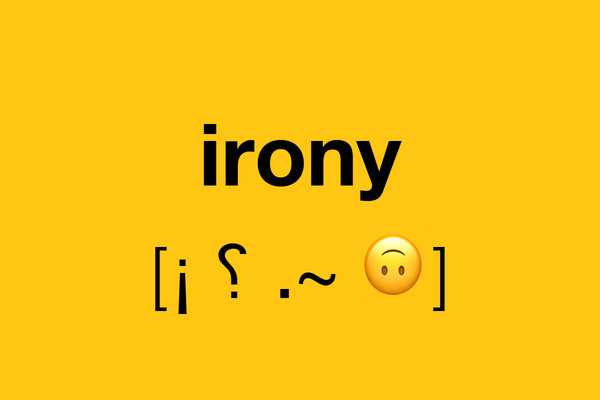 Can irony really be conveyed with punctuation?For centuries, wordsmiths have demanded punctuation marks that would convey irony and sarcasm the way verbal intonation does in spoken conversation.
 What it means to 'root' for the home teamDoes "rooting" for a sports team have to do with the underground parts of plants? Yes, etymology suggests – and pigs may be involved, too.
 ‘Fitting’ or ‘filling’ the bill: Which one to use?From filling to fitting to footing, the English language has lots of "bill" idioms – but the bills involved are not the same.
 When people find themselves ‘at loggerheads’Whether at "at sixes and sevens" or "at loggerheads," these idioms both suggest being mired in the midst of a strong disagreement.
 How should we talk about artificial intelligence?It’s easier for the general public to grasp what is going on when complicated computerized processes are explained in terms of human cognition.
 Panther, puma, cougar: All names for the same catVermonters have catamounts while Northwesterners have cougars. But, it turns out, there's only one wild cat in the New World, Puma concolor.
 No more glossing over ‘greenwashing’"Green" has been used since the 1970s to describe individuals, political parties, and products that take steps to preserve the natural environment.
 From ‘watershed moments’ to ‘windfalls’The media loves to write about "watershed" moments, our language columnist writes. Geologically, though, a watershed is a drainage basin.
 From ‘permacrisis’ to ‘humor,’ the year in wordsThe past two years were all about COVID-19 – "pandemic," "quarantine," "vaccine." This year dictionaries have (mostly) moved on.
 I’m having ‘lightbulb moments’ about ‘epiphanies’English has made a connection between light and insight – think "enlightenment" since its beginnings as a language.
 This winter, get ‘cozy’ in your ‘snuggery’Denmark has "hygge," but don't forget the Norwegian "koselig," the Swedish "mys," or the Icelandic "gluggaveður" (window weather.)
 How marriage words evolved over centuriesEven the now-ordinary terms "man" and "wife," "husband," and "groom" were once lexical innovations.
 Words help construct the reality we live inAristotle posited that houses aren’t just material structures of stones, bricks, and timber. They are also “receptacles to shelter ... living beings.”
 The words that evoke ‘sound pictures’Stars don’t make sounds we can hear, but saying that they “twinkle” at night is a way of painting a picture with sound.
 Human experience is shared, even if words aren’tJust because you don’t speak Danish doesn’t mean that you can’t experience the particular sense of coziness that the famous "hygge" denotes.
 Meet the ‘noble cousins’ on the family tree of wordsWhen people in Greece make a deal or reach an agreement, they achieve a symphonía. Seeing eye to eye is a “symphony,” which is a beautiful thought.
 Colorful stories of acronyms are often falseNo, “golf” does not mean “gentlemen only; ladies forbidden.” Rather, its dry etymology leads us back to the Middle Dutch word “colf” or “colve.”
